Key Insights
Organizations are rethinking the role of the third-party secure email gateway (SEG).
Built to block known threats at the perimeter, third-party SEGs were designed for a different era. Today’s attacks rely on legitimate domains, trusted relationships, and AI-crafted content that exploits human behavior—tactics that bypass static, rule-based inspection.
Based on The Essential Guide to Retiring the SEG, the infographic outlines why third-party gateways create blind spots, duplicate native cloud protections, and add unnecessary operational drag in modern environments.
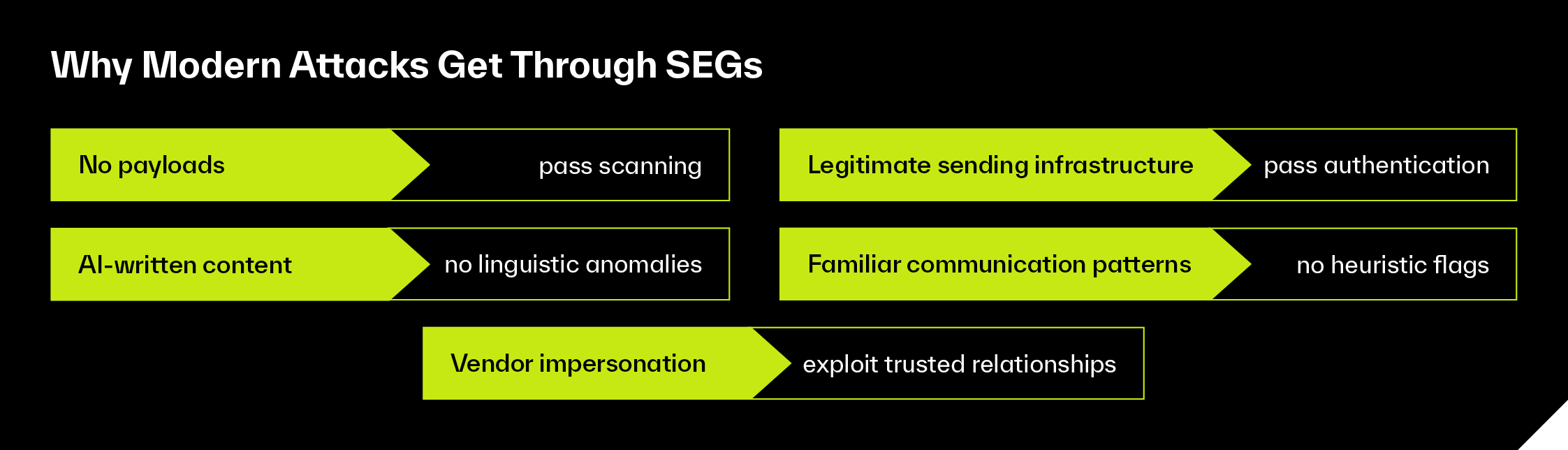
Inside the infographic, you’ll find:
- Why modern attacks are designed to get through traditional SEGs
- Where third-party SEG costs accumulate across licensing and SOC workflows
- How native cloud protection paired with behavioral detection provides stronger coverage
- What life beyond the third-party SEG looks like for security teams
Download the infographic to explore a cloud-native model built for human risk, not perimeter filtering.
Download PDF