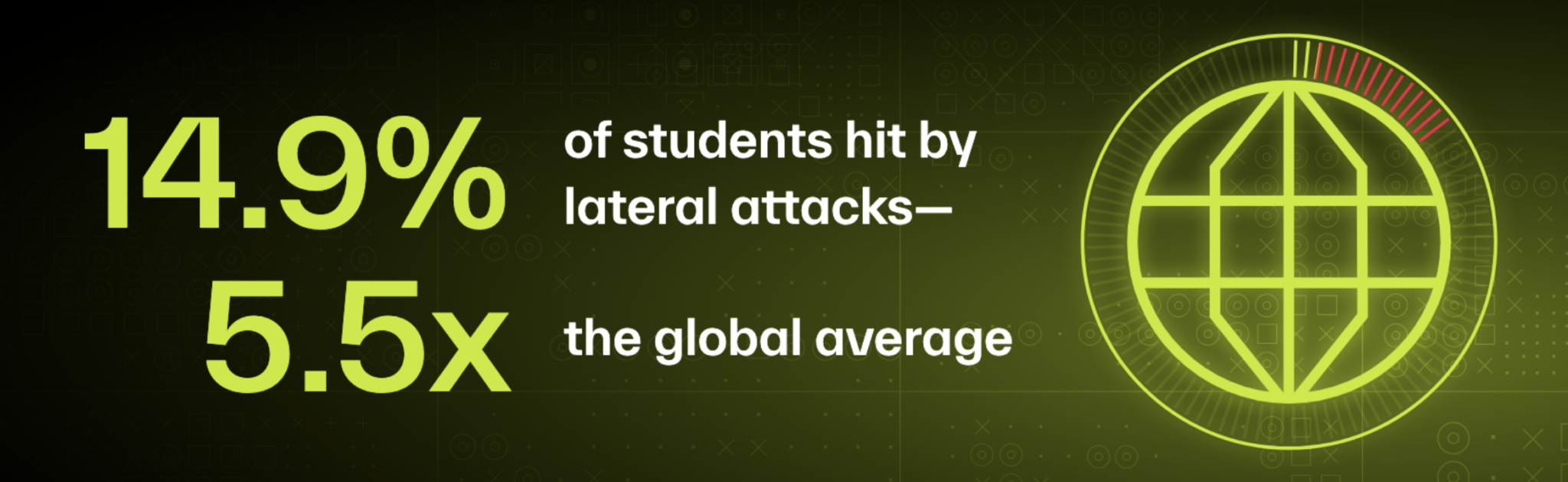
Lateral attacks (where a compromised internal account is used to attack others inside the same institution) are rare in most industries, but endemic in higher education. The structural conditions of a university make it uniquely hospitable to this threat. And because the user population resets every semester, the vulnerability never improves, it just starts over.
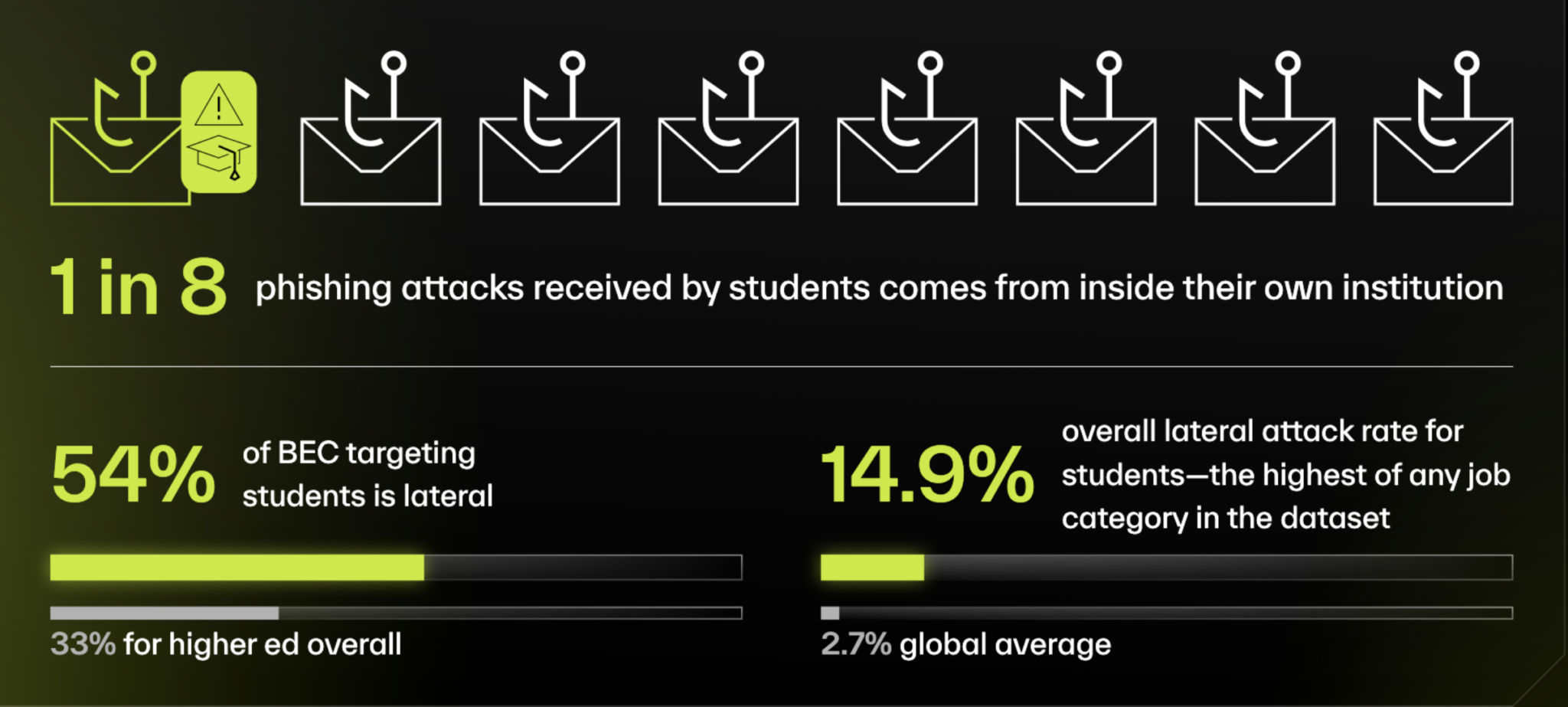
Students Are the Primary Target
Lateral attacks in higher education concentrate on students, not staff—and the numbers are striking.
Why Higher Ed Is Uniquely Vulnerable
Several structural features of the university environment, not just user behavior, create the conditions for lateral spread.
Constant Turnover
Thousands of new accounts every semester, no institutional memory from the prior cohort.
Password Reuse
Common across student populations, making credential harvesting straightforward.
Dormant Accounts
Alumni, transfers, and withdrawn students often stay active long after they've left, providing unattended footholds.
Built-in Trust
.edu addresses carry implicit credibility; academic email systems are open and federated by design.
The Self-Propagating Cycle
Once one account is compromised, it becomes a launchpad to compromise more. The cycle sustains itself, and can reset with each new class.
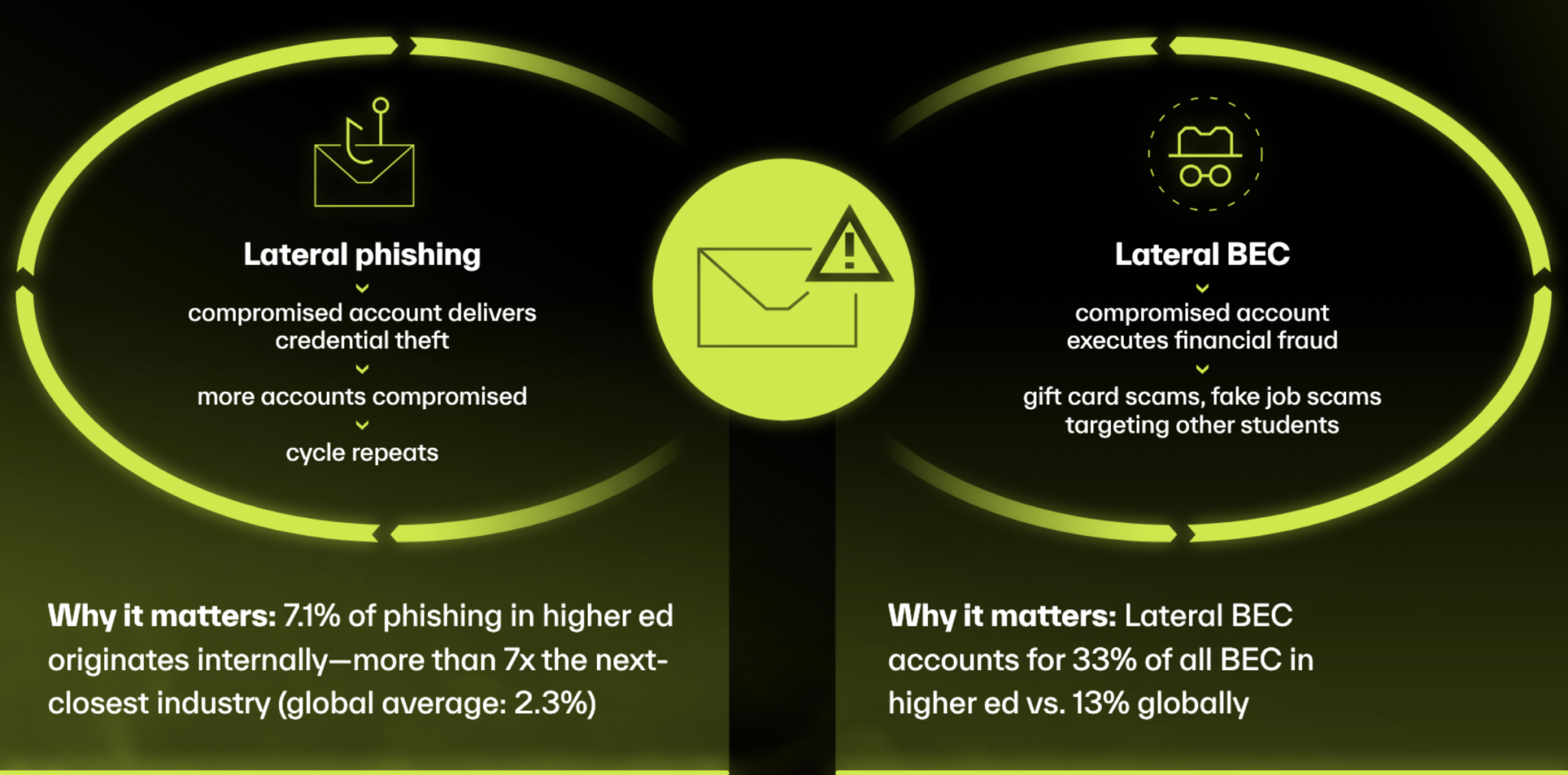
Attacks that originate from inside the institution look identical to legitimate email at the infrastructure level. Stopping them requires understanding what normal communication looks like, and flagging when something doesn't fit.
Higher education is one of 8 industries covered in the 2026 Attack Landscape Report, analyzed across ~797,000 attacks.
Get the Higher Ed Attack Data