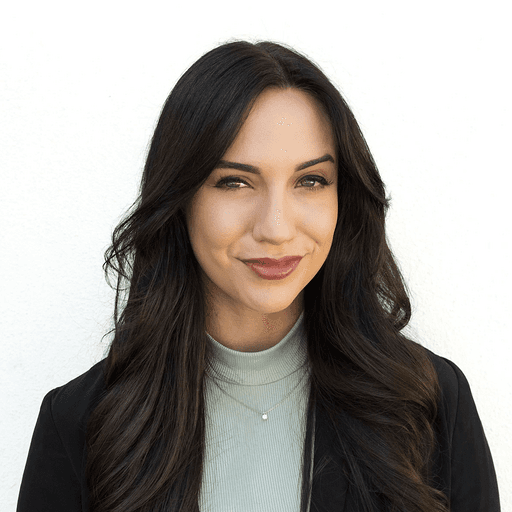
Shannon Trumbull has spent two and a half years as a Senior Customer Success Manager at Abnormal AI, based out of Tampa, Florida. Ask her what a typical day looks like and she will tell you what every CSM tells you, that it depends. Some days are full of quarterly business reviews and customer calls, others involve flying out to meet a customer in person or standing in a booth at a security conference. What stays constant, she says, is the obsession with the customer that shapes everything else.
What Customers Told Her This Year
This year gave Shannon two moments she keeps coming back to. She thinks of a trip to Michigan, where an architect on one of her accounts told her Abnormal had changed his life by taking email and AI Security Mailbox off his plate, freeing him up for the parts of his job that needed him more. Months later, at dinner with a different customer and the account executive she works alongside, she heard something similar. The customer talked about his life before Abnormal and his life after, and the shift was not abstract to him.
"In the time that we've given back to him, he's been able to accelerate his career and get promotions just based off of being able to take on more meaningful work."
He described the product the way a lot of customers do once they trust it, as something he does not have to think about anymore. Hearing that in person, over dinner, hit differently than reading it in a survey.
Shannon heard a different version of the same thing this August at her first Black Hat, one of the largest security conferences in the world. She spent the week talking with people outside her own accounts, curious what the wider industry thought of Abnormal and how closely that matched what she sees day to day. The conversations at the booth, about where Abnormal is headed with AI and insider risk, left her looking forward to next year's conference already.
Learning to Wave the Flag
Not every stretch is smooth, and Shannon is candid about that. Earlier this year she had several accounts hit escalations at the same time, which meant learning fast how to hold steady under pressure without losing track of any one customer. She leaned harder on her leadership team, asking for help and giving updates constantly instead of waiting until she had a full picture. She pulled in people who were not even tied to the accounts, from executive sponsors to teammates with old relationships worth reviving, because the work called for it.
"Be relentless as a customer success manager, continuing to wave the flag until you get what you need."
That stretch made her a sharper CSM, more willing to get creative about how a customer problem gets solved.
Turning Around What Looked Lost
That instinct paid off on an account she inherited with a single year left on its contract and a rocky history that had Abnormal forecasting churn. Instead of treating the account as a lost cause, Shannon pulled in everyone connected to it, built relationships beyond the ones that already existed, and pushed to get in front of decision-makers who had not heard from Abnormal directly before. A year later, the account was renewed.
"Just because you inherit an account that might be in bad standing doesn't mean that it's always done."
It is the kind of win that never shows up in a highlight reel, mostly because nobody outside the account ever hears about the year of work behind it. For Shannon, that is beside the point. What matters to her is that a customer who came in ready to churn ended the year as a renewal.
A Team That Feels Like Family
Abnormal is remote-first, and Shannon says that is one of the things she loves most about working here, alongside how deliberately the company still gets people in the same room. Training, conferences, sales kickoff, and the annual Customer Success Summit all give her a chance to learn from other CSMs who are solving problems she has not run into yet, which pushes her to think differently the next time she hits a wall of her own. The team itself, she says, is full of funny, sharp people from all over the world who share the same mindset no matter where they are logging in from.
"I think we have a really unique group here. It's one of the best."
They make time for each other during the week the same way they make time for customers, which is not something Shannon takes for granted after two and a half years of watching the team grow.
AI Without Losing the Human Part
Ask Shannon how AI shows up in her work and she does not talk about it as a novelty. She uses it most on live customer calls, pulling fast, detailed answers to technical questions that need more than a surface-level response, drawing on skills and playbooks her team has built internally. It shows up in the dashboards she builds to track customer milestones and the talk tracks she preps before a hard conversation too.
"It really has sped up my admin process while not taking away from the human element of my job."
That is what she keeps coming back to, that the tool moves faster while the relationship still gets built the way it always has.
Two and a half years in, it's still the customers who make the job worth it. That's part of why Shannon's advice for anyone eyeing a spot on her team carries the same energy she brings to her accounts: show up as yourself, come prepared, and bring real examples of how you have fought for a customer before, whatever industry that fight happened in.
If this sounds like your kind of work, see our open Customer Success roles on our careers website.