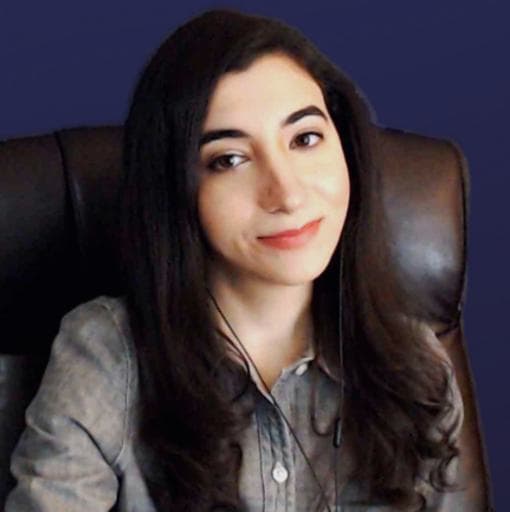
Sara Faradji's doctoral dissertation was titled “Afropolitan Hackers.” It was an academic study of hacking, phishing, and social engineering as narrative forces in Anglophone African literature - research that turned out to be better career preparation for cybersecurity than she ever intended.
Now she's a Technical Writer at Abnormal, building AI agents, designing documentation workflows from scratch, and helping customers get up and running with products that protect them from the exact kinds of attacks she once studied in literature. The path from the classroom to the codebase was not a straight line. At Abnormal, she found out it didn't have to be.
From Dissertation to Detection Engine
Sara spent over a decade in academia before making the move into tech. Her research sat at the intersection of language, narrative, and trust - themes that turned out to translate directly into cybersecurity, a field where understanding how communication works is just as important as understanding how systems work.
At Abnormal, Sara’s job is to make sure customers can deploy products quickly, configure features correctly, and get their environments protected without friction. What she didn't expect was how far the role would stretch. Within months, product managers and engineers were pulling her directly into the launch process. She was building documentation while they were still building the specs, sitting inside the development cycle rather than waiting at the end of it.
"I feel like I'm not just someone who documents, but someone who builds," she said. "And the culture at Abnormal really encourages you to solve problems in the way that you think is best."
"I've realized that I'm doing a lot more than just writing. I'm actually building tools and systems and deciding how certain specialized knowledge gets transferred into actionable guidance."
What the Humanities Bring to Technical Work
Sara's training in English and rhetoric taught her to think about audience before content - who needs to know what, in what form, and at what moment. In technical writing, that turns out to matter as much as knowing the product itself.
"In technical fields, the instinct is to be quite comprehensive," she explained. "You need to define every term and cover every edge case. But the humanities teach you that it's not always thoroughness that's important. It's being able to explain information clearly and give the reader the context they really need, at the right place, at the right time."
"I love working with engineers because we can really think about all these different complex use cases and what's most valuable for the user. But then as a humanities person, I can reel it back in and think about what the user needs to know at this moment to complete this specific task."
A project that made that dynamic visible was Abnormal's report phishing button - a feature that lets customers flag suspicious emails and receive immediate security training based on what they reported. Building it brought together engineers, product managers, sales, marketing, and legal in what Sara described as a rapid-fire incubator, with everyone going well beyond their job titles to ship something that mattered to customers.
"What I brought was a deep understanding of security awareness training, what the ideal end-user experience looked like and needed to feel like," she said. "That's where the humanities and technical work just mesh well together. When everyone is sharing their perspectives, you get to see things in new ways. That's how you actually build something customers love."
The Shift From Reactive to Proactive
In the past year, Sara has rebuilt how documentation gets made at Abnormal - and the clearest example is a tool she built herself: a documentation gap scanner that runs every week.
The scanner monitors customer-facing channels for questions, cross-references them against the existing knowledge base, and drafts new knowledge articles for any gaps it finds - articles written to a style guide Sara also built. The goal is to answer questions before customers have to ask them, to surface missing documentation before it becomes a support ticket.
"That shift from reactive to proactive is something that I really want our documentation infrastructure to be all about."
The scanner is one example of a broader change in how Sara works. When she started using internal AI tools to pull directly from the codebase and from pull requests, she stopped waiting for handoffs. She could begin building documentation as soon as a pull request merged, working from what she could see in the code rather than waiting for someone to brief her.
That freed her up to spend more time on the questions she finds most interesting: not what does this feature do, but what does this customer need to understand, and what kind of deliverable would get them there fastest. A product walkthrough guide. An architectural diagram. A prompt engineering guide. The content decisions that used to come after the writing now shape it from the beginning.
"I'm able to spend more time focusing on the more rewarding aspects of this job," she said, "which is putting myself in the customer's shoes and deciding what context they need, what deliverable would be best in this case."
Intellectual Honesty as a Practice
When Sara talks about Abnormal's VOICE values, she comes back to intellectual honesty - not as an abstract principle but as something she practices daily.
"Intellectual honesty is the core value of my work, from academia to Abnormal," she said. "It means when I'm writing documentation, I'm not overselling. I just tell you what you need to do and how to do it. And it also means sometimes being that healthy skeptic in the room when it comes to GenAI tool use."
She uses AI tools extensively - to collect sources, speed up investigations, flag discrepancies, pull from the codebase. But she's consistent about questioning the output until she's confident in the answer, treating skepticism as part of the craft rather than a brake on it.
That orientation carries over into how she thinks about documentation itself. Good documentation, in Sara's view, works like Abnormal's detection engine: invisible when it's working, consequential when it's not.
"When it works, users don't even need to think about the documentation. It's just a few clicks and they get set up and they’re ready to go. That's exactly the job that I want to do."
Still a Teacher
Outside of work, Sara still teaches. She records video lectures, leads online workshops, and shares resources she describes as rhetorical toolkits for the AI age - material to help scholars and builders understand how to work with new technologies thoughtfully.
When she figures out how to automate a workflow or build an agent that solves a real problem at Abnormal, she shares how it works, what guardrails matter, and why being intentional with language still counts when you're working with AI.
"So when I learn and build at Abnormal, I pay it forward," she said.
"Abnormal is the place where my range of skill sets is useful. I came in with a PhD in English, and I intended to be a technical writer, but I ended up building AI agents."
